Record the pattern of damp or water
A stain that follows heavy rain raises different questions from a heating system that repeatedly loses pressure. A change after building work may be relevant too. Note when the problem first appeared and whether it is spreading, recurring or drying out.
You do not need to decide the cause yourself. Photographs taken over time, previous reports and what you know about alterations can help explain the problem to the office.
Possible sources of water in an older building
- Supply and heating pipework
- A concealed pipe leak may affect floors, walls or adjoining rooms. Later alterations and undocumented pipe routes can make the visible patch a poor guide to the source.
- Water entering the building
- Rainwater may enter through roofs or other parts of the building envelope. ADI can discuss roof and ingress enquiries separately from plumbing investigations; safe, suitable access is essential.
- Moisture in the building fabric
- Condensation and moisture moving through materials can also contribute to damp. A wider assessment may be needed when a suspected pipe leak does not explain the symptoms.
Traditional materials and moisture
Traditional brick, stone, timber and lime-based finishes can take up and release moisture. A listed building may combine these with later construction and repairs. Establishing what is present helps avoid assumptions about how a particular wall or floor behaves.
Historic finishes and earlier service routes may also constrain access. Tell ADI about them at the enquiry stage and involve your building or conservation adviser where the wider fabric needs assessment.
The Historic England, RICS and PCA joint statement explains the importance of investigating the causes of moisture in traditional buildings.
Moisture meter and thermal imaging readings
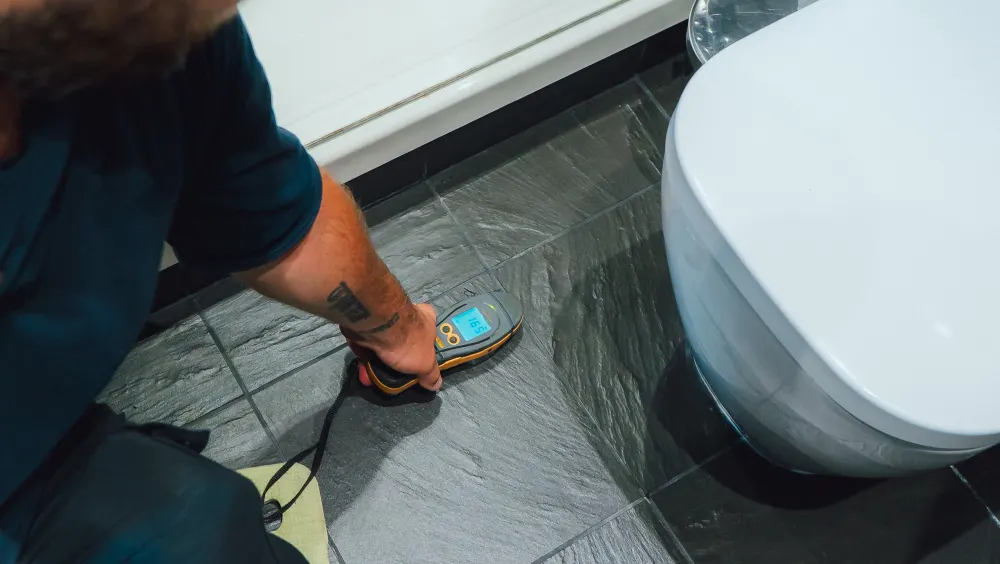
Electrical moisture readings in masonry can be affected by salts and differences in material. Thermal imaging records surface-temperature differences. Neither provides a diagnosis on its own.
The useful picture comes from the pattern of observations, suitable tests and the building’s history together. Read about the methods ADI may discuss and their limits.
Choosing the right leak investigation
What should I tell ADI first?
Give the postcode, describe the symptom and say that the building is listed. Explain any immediate access restrictions and whether an architect, surveyor, managing agent or conservation officer is already involved.
What if the cause is still uncertain?
Say so. Discuss what the proposed investigation can establish and whether a broader building assessment is appropriate. Further access or another appointment may be needed; a single visit cannot be assumed to resolve every moisture problem.